Column · @marioiovb688
Commercial Plumber Work and License Verification in Hawaii
Commercial plumbing is one of those trades that disappears into the background when everything works and takes over the entire day when it does not. In Hawaii, that reality is sharper because a plumbing problem at a business can affect customers, tenants, kitchens, restrooms, equipment, and health standards all at once. A clogged line in a small office is inconvenient. A failed water heater in a lodging property, food business, or multi-use building can interrupt operations immediately.
That is why license verification matters just as much as the repair itself.
In Hawaii, a plumber’s license is required for any person who performs plumbing work, and the state directs consumers to verify license status through the Department of Commerce and Consumer Affairs licensing system. For owners, managers, and facility staff, that is not a bureaucratic detail. It is one of the first checks worth making before any commercial plumber starts work, especially when the job involves drain cleaning, sewer line repair, leak detection, or a system as important as hot water.
Why commercial plumbing work deserves a closer look
Commercial plumbing is often spoken about as if it were just a bigger version of residential work. Sometimes that is true in a limited sense. Pipes still leak, drains still clog, and water heaters still fail. But the pressures are different. A business usually has more fixtures, more occupants, stricter downtime costs, and less tolerance for trial and error.
A restaurant, medical office, retail center, or mixed-use property can all have plumbing problems, yet each one puts stress on a system in a different way. A clogged lavatory line in a low-traffic office may be manageable for a few hours. A backed-up drain in a customer-facing business can shut down parts of the premises or create immediate sanitation concerns. A small hidden leak can also be more expensive in a commercial setting because the damage often affects walls, flooring, tenant spaces, or operating schedules.
That is where the phrase commercial plumber matters. It signals more than job size. It points to work performed in settings where planning, access, timing, and accountability carry real financial consequences.
In Hawaii, the https://franciscohmln993.solsticebrief.com/posts/solar-water-heater-repair-and-service-in-the-hilo-area baseline issue is straightforward: plumbing work requires proper licensing. Before discussing who to hire, where to search for a plumber near me, or whether to call an emergency plumber after hours, it helps to understand that license verification is not optional due diligence. It is a practical first step.
What Hawaii requires
The verified state guidance is clear. In Hawaii, a person who performs plumbing work must hold a plumber’s license. The licensing, renewals, and continuing competency requirements are handled by Hawaii’s Board of Electricians and Plumbers. The public side of that system matters to consumers because Hawaii also provides a license-search tool through the DCCA.
That search system allows a member of the public to check several things that are directly useful when hiring:
- active status
- original licensure date
- expiration date
- disciplinary history
Those four points tell you a great deal without requiring guesswork. If a business owner is comparing two companies or two individual plumbers, an active license is the minimum threshold. Original licensure date adds context, though it should not be treated as the only measure of quality. Expiration date matters because a license that is about to lapse may warrant a follow-up question. Disciplinary history is worth reviewing because it gives a consumer a chance to pause before authorizing work on a high-value commercial system.
For the current renewal cycle noted by the state, licensed plumbers on active status must complete continuing competency based on the 2021 Uniform Plumbing Code for the July 1, 2024 to June 30, 2027 renewal period. That detail matters because it shows that Hawaii does not treat plumbing as a static trade. Standards move, code knowledge must be refreshed, and active licensure involves more than getting licensed once and disappearing into the field forever.
License verification is not just for major projects
Owners often think about license checks when they are bidding out a large tenant improvement or replacing a major water line. In practice, the smaller calls are where people cut corners. Someone searches plumber near me, sees a truck in the neighborhood, and schedules a visit for what seems like a routine issue. Maybe it is water heater repair, a recurring backup, or a slab leak concern that started as a damp patch near a wall.
That is exactly when the verification step tends to get skipped.
The reality is that minor plumbing calls can turn major fast. A simple service visit might uncover a deeper drainage issue. A leak detection call could expose a hidden branch line problem. A request for drain cleaning might lead to the discovery of a damaged sewer section. The first technician through the door often becomes the person a manager relies on to diagnose the next decision. Verifying licensure up front keeps that trust grounded in something concrete.
This is especially relevant in places where response time matters. When people are under pressure, they are more likely to hire the first available emergency plumber. Availability is important, but commercial property owners should still verify the license. The state has already created the public system for that purpose.
The practical value of checking the DCCA system
The DCCA public search tool is useful because it moves the conversation away from marketing language. Anyone can describe themselves as experienced. Anyone can build a good-looking website. A business can advertise water heater repair, sewer line repair, or solar water heater repair, but the customer should still confirm the licensing record independently.
A license check does a few things at once. First, it confirms whether the person or business is currently in active status. Second, it shows whether the license has a visible history, including original licensure date. Third, it lets a customer see expiration timing and any disciplinary history. None of that tells you everything about workmanship, communication, or scheduling discipline, but it creates a reliable starting point.
That starting point is especially helpful in commercial settings where multiple people may be involved in vendor approval. A property manager may spot the issue, an owner may authorize the cost, and a facilities employee may handle site access. A verified record gives everyone the same baseline facts.
When verification becomes urgent
There are a few categories of calls where managers tend to move fast, sometimes too fast. Emergency plumbing is the obvious one. A failure involving occupied bathrooms, hot water service, or a persistent leak is hard to postpone. But urgency does not erase the need to verify.
Commercial hot water trouble is a good example. A business may need immediate water heater repair because staff need hot water for sinks, cleaning, or normal occupancy. In parts of Hawaii, solar systems also come into the conversation, so solar water heater repair may be part of the scope. A fast response matters, but so does confidence that the person performing the work is licensed as required by the state.
Drainage work is another category where quick hiring can lead to sloppy decisions. Drain cleaning sounds routine, yet recurring blockages sometimes point to larger problems. On the commercial side, sewer line repair can be disruptive and expensive. If a property owner is authorizing diagnostic work that may expand into repair recommendations, a verified license record is a reasonable minimum before anyone starts.
Leak calls deserve the same caution. Leak detection is often one of the most valuable services a plumber provides because the source is not always obvious. A ceiling stain may not indicate the nearest pipe. Water can travel. So can assumptions. Once walls, floors, or tenant spaces are involved, costs rise quickly. Hiring a licensed plumber helps keep that process tied to a qualified trade professional rather than a guess-and-check approach.
Hilo as a local example
On the Big Island, a search for a Hilo plumber often turns up companies that advertise a wide range of services. Verified local business materials show that Hilo-area plumbing companies market services such as drain cleaning, sewer line repair, water leak detection, emergency plumbing, water heater installation and repair, and solar water heater service. That tells you something important about the real market. Customers are not just hiring for one narrow specialty. They are often calling for a service visit that may span several systems and lead to broader recommendations.
That mix of work is common in practice. A property manager may call about a backed-up drain and end up discussing an aging sewer line. A hotel or restaurant may schedule water heater repair and later ask about leak detection elsewhere in the building. A retail center may first request an emergency plumber after a weekend issue, then continue the relationship for routine maintenance calls.
For customers in Hilo or elsewhere in Hawaii, the takeaway is simple. Local availability matters, and finding a Hilo plumber who can respond is valuable. But proximity should not replace verification. Whether the referral comes from a neighbor, a tenant, or a search for plumber near me, the state’s license search system remains the right checkpoint.
Experience matters, but so does current status
People often ask a fair question: if someone has been doing this a long time, is the license search really necessary? The answer is yes.
There is a difference between hearing that someone has years in the field and confirming that the license is active now. There is also a difference between prior experience and a current renewal period that includes continuing competency requirements. Hawaii’s Board of Electricians and Plumbers oversees those renewals and continuing competency obligations, and for the current cycle the requirement is tied to the 2021 Uniform Plumbing Code. That is not a small administrative detail. It reflects the state’s expectation that an active licensed plumber stays current.
A commercial client should care about that. Plumbing work does not happen in a vacuum. Systems age, buildings change use, and standards evolve. Current active status tells you the person is participating in the actual licensing framework Hawaii has in place today.
A sensible verification routine for owners and managers
For commercial clients, the best approach is to make license verification routine rather than situational. If you wait until there is standing water in a hallway or a building manager is fielding tenant complaints, the pressure of the moment can crowd out basic checks.
A simple internal practice helps. Before approving a new plumbing vendor, before dispatching someone to a tenant space, and before signing off on larger repair recommendations, confirm the public license record. It takes less time than dealing with a disputed invoice or scrambling for answers after avoidable mistakes.

A practical routine looks like this:
- Get the full business or individual name exactly as provided.
- Check the Hawaii DCCA public licensing system for active status.
- Review original licensure date, expiration date, and disciplinary history.
- Keep a screenshot or internal note in the vendor file.
- Recheck if the work is delayed or the renewal period is near.
That process is not about distrust. It is vendor management. Commercial properties already track insurance documents, proposals, and access procedures. License verification belongs in the same file.
What license verification does not tell you
A public record is valuable, but it is not the whole story. An active license does not tell you how quickly a company returns calls, whether they explain options clearly, or how they coordinate around operating hours. It does not tell you if they are especially strong at tracing intermittent leaks or if they communicate well with tenant representatives during a disruption.
That is where ordinary judgment still matters.
Commercial clients should pay attention to how a plumber describes the problem, whether the explanation stays consistent, and whether the scope changes are explained plainly. If a call starts as drain cleaning and shifts into discussion of sewer line repair, the customer should understand why. If a service request for water heater repair uncovers issues affecting a solar system, the reasoning should be clear. Good trade professionals are usually direct about what they know, what they need to inspect further, and what remains uncertain.
The strongest hiring process blends both sides. Use the license system for objective verification, then use experience, references, and communication quality to decide whether this is the right fit for your building.
The commercial cost of getting it wrong
A poor plumbing hire can cost far more than the invoice. The direct bill is only the first layer. There may be downtime, upset tenants, delayed openings, repeat visits, or damage restoration. Even when the original issue looks ordinary, a weak diagnosis can drag out the disruption.
Think about a recurring drain backup in a business suite. If the first visit only clears the symptom and nobody investigates why it keeps happening, the property may face another shutdown within days or weeks. The same pattern shows up with hidden leaks. Without solid leak detection work, managers may repair finishes while the water source remains active behind the wall. Water heater problems can follow a similar path when the root cause is not identified and a temporary fix fails during a busy period.
None of this proves that a licensed plumber will be perfect every time. Trade work is still field work, and buildings can be unpredictable. What the license verification step does is reduce avoidable risk at the front end by confirming that the person doing the work is part of Hawaii’s regulated framework.
Why this matters for search-driven hiring
Many plumbing calls begin online now, often with a rushed search term. People type plumber near me when they are standing in a puddle or hearing a tenant say the restroom is down. Others search emergency plumber because speed feels like the only priority. On the Big Island, a manager may specifically search Hilo plumber because location affects response time.
Those searches are practical, but they can also flatten important distinctions. Search results often place ads, maps, reviews, and service pages side by side. It becomes easy to treat all visible options as equally vetted. They are not. A business may advertise drain cleaning, sewer line repair, leak detection, water heater repair, or solar water heater repair, but the customer still has to verify the licensing record independently through the state system.
That extra step is especially important for commercial work because the stakes are larger than a one-time house call. A plumbing vendor may gain access to tenant areas, utility spaces, shutoff locations, and critical building systems. Verification should happen before that relationship starts, not after a problem raises doubts.
The steady habit that protects commercial properties
The strongest property operators tend to treat plumbing vendors the same way they treat any essential trade partner. They do not rely only on a familiar logo, a neighbor’s recommendation, or a polished estimate. They verify the basics, document what they find, and then judge the company by how it performs.

Hawaii has made that easier by maintaining a public license-search system through the DCCA and by placing licensing, renewals, and continuing competency under the Board of Electricians and Plumbers. For a commercial client, that means the tools already exist to make a smarter first decision.
Whether the immediate need is an emergency plumber, routine drain cleaning, leak detection, sewer line repair, water heater repair, or solar water heater repair, the first practical question stays the same: is the plumber properly licensed and currently active in Hawaii?
For commercial properties, that question is not paperwork. It is part of protecting the building, the tenants, and the business itself.
Name: P&S Plumbing Hilo
Address: 879 Manono St B, Hilo, HI 96720, United States
Phone: 808-935-3892
Website: https://www.psplumbinghawaii.com/locations/hilo/
Email: [email protected]
Hours:
Sunday: Open 24 hours
Monday: Open 24 hours
Tuesday: Open 24 hours
Wednesday: Open 24 hours
Thursday: Open 24 hours
Friday: Open 24 hours
Saturday: Open 24 hours
Time zone: Hawaii-Aleutian Time
Open-location code / Plus code: PW6J+35 Hilo, Hawaii, USA
Map/listing URL: https://www.google.com/maps/search/?api=1&query=Google&query_place_id=ChIJ4Wwh4jGFTIQRdIh8RLXElbM
Embed iframe:
Socials:
https://web.facebook.com/psplumbinghilo/
https://www.instagram.com/psplumbinghilo
https://ph.pinterest.com/psplumbinghilo/
https://x.com/psplumbinghilo
https://www.linkedin.com/in/psplumbinghilo
P&S Plumbing Hilo provides plumbing services from its Hilo location on Manono Street.
The official Hilo page lists plumbing support for Hilo and surrounding communities, with Hilo phone service available at 808-935-3892.
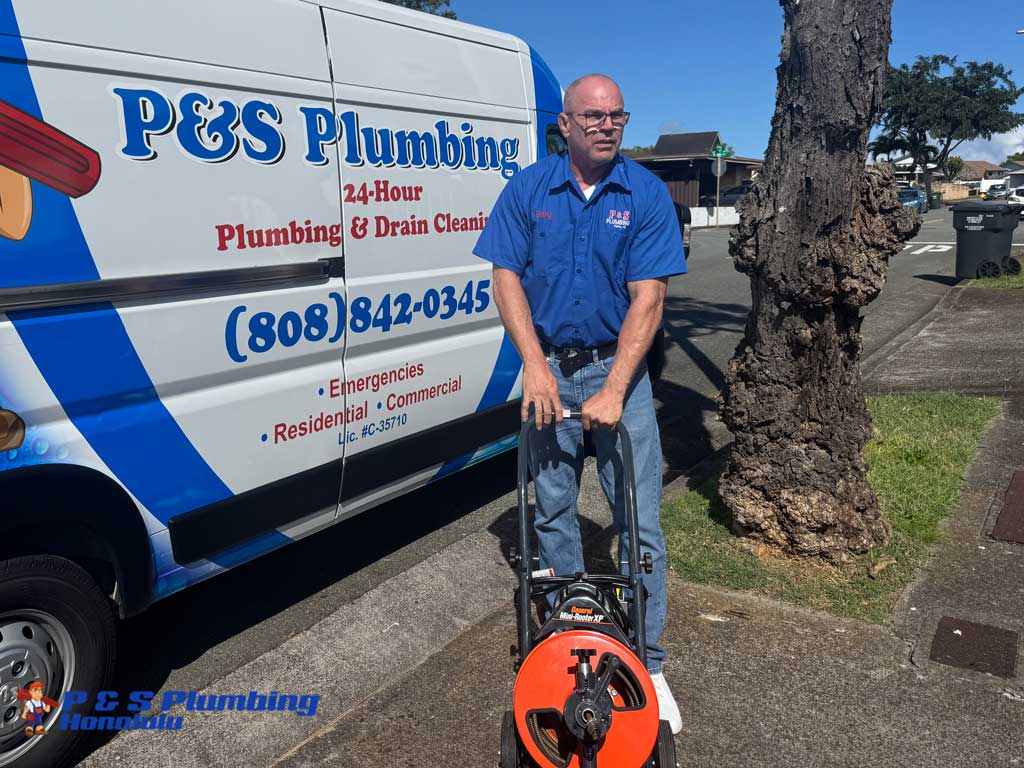
P&S Plumbing provides residential plumbing, commercial plumbing, drain cleaning, sewer-line service, water heater work, plumbing repairs, leak detection, fixture repair, bathroom plumbing, kitchen plumbing, and emergency plumbing support.
The official contact page lists the Hilo location at 879 Manono St, Unit B, Hilo, HI 96720.
The company’s official site lists Hawaii State License Number CT-35710 and describes P&S Plumbing as licensed and insured.
Customers can contact P&S Plumbing Hilo for clogged drains, sewer-line concerns, water heater service, plumbing leaks, fixture repairs, toilet issues, kitchen plumbing, bathroom plumbing, commercial plumbing, residential plumbing, and urgent plumbing requests.
For plumbing service in Hilo and East Hawaii, call 808-935-3892 or visit https://www.psplumbinghawaii.com/locations/hilo/
The supplied public map listing uses plus code PW6J+35 Hilo, Hawaii, USA and can help customers find P&S Plumbing Hilo near Manono Street.
Popular Questions About P&S Plumbing Hilo
What does P&S Plumbing Hilo provide?
P&S Plumbing Hilo provides plumbing services for residential and commercial customers, including drain cleaning, sewer and drain service, water heater service, plumbing repairs, fixture repair and installation, leak detection, bathroom plumbing, kitchen plumbing, and emergency plumbing.
Where is P&S Plumbing Hilo located?
The official contact page lists the Hilo location at 879 Manono St, Unit B, Hilo, HI 96720.
What phone number should Hilo customers call?
The official website lists Hilo phone number 808-935-3892.
What is the email address for P&S Plumbing Hilo?
What are P&S Plumbing Hilo’s hours?
The listing hours show P&S Plumbing Hilo as open 24 hours a day, seven days a week, Hawaii-Aleutian Time. Customers should call 808-935-3892 to confirm service availability for urgent needs.
Is P&S Plumbing licensed?
The official Hilo page lists Hawaii State License Number CT-35710. Customers can confirm license status directly with the relevant Hawaii licensing authority before hiring.
Does P&S Plumbing Hilo offer emergency plumbing?
Yes. The official Hilo page references emergency services, and the supplied listing shows 24-hour availability.
Does P&S Plumbing Hilo handle water heaters?
Yes. P&S Plumbing’s official site lists water heater repair and installation services, including service for the Big Island and Hilo.
What areas does P&S Plumbing serve from Hilo?
The official site lists service for Hilo and surrounding areas, with broader P&S Plumbing service across the Big Island and Oahu.
How do I contact P&S Plumbing Hilo?
Call 808-935-3892 or visit https://www.psplumbinghawaii.com/locations/hilo/. Social profiles: Facebook, Instagram, Pinterest, X, and LinkedIn.
Landmarks Near Hilo, HI
Manono Street: The street listed for P&S Plumbing Hilo and a practical reference point for the Hilo location.
Kamehameha Avenue: A major Hilo waterfront route connecting downtown, commercial areas, and local service corridors.
Hilo Bayfront: A central Hilo waterfront landmark near downtown businesses and residential areas.
Downtown Hilo: A major East Hawaii business, civic, and residential district served by local plumbing contractors.
Hilo Farmers Market: A well-known downtown Hilo landmark and local reference point.
Hilo Harbor: A major commercial harbor and industrial-area landmark near Hilo service routes.
Prince Kūhiō Plaza: A major Hilo shopping landmark near residential and commercial areas.
University of Hawaiʻi at Hilo: A major education landmark serving the Hilo area.
Hawaiʻi Community College: A local education landmark near central Hilo routes.
Hilo International Airport: A major East Hawaii transportation landmark near commercial and residential service areas.
Liliʻuokalani Gardens: A well-known Hilo park and waterfront landmark near Banyan Drive.
Banyan Drive: A recognizable Hilo hotel and waterfront corridor close to Hilo Bay.
Wailuku River State Park: A major natural landmark near Hilo, including Rainbow Falls and nearby residential areas.
Panaʻewa Rainforest Zoo and Gardens: A Hilo-area landmark southeast of downtown.
Keaukaha: A coastal Hilo community with homes, parks, and local plumbing service needs.
For residential plumbing, commercial plumbing, drain cleaning, sewer-line repair, water heater service, leak detection, fixture work, bathroom plumbing, kitchen plumbing, or emergency plumbing near these Hilo and East Hawaii landmarks, contact P&S Plumbing Hilo at 808-935-3892 or visit https://www.psplumbinghawaii.com/locations/hilo/